Say What You Feel Its Not Being Rude SVG
As a designer and embroidery product reviewer, I’ve seen countless designs that look great on screen but fall apart in real-world use. Say What You Feel Its Not Being Rude SVG is one that caught my attention for its bold message and versatile potential. But before jumping into using it in projects, I wanted to test it out in different scenarios to see how it holds up in actual embroidery work.
First Impressions: A Bold Statement with Creative Potential
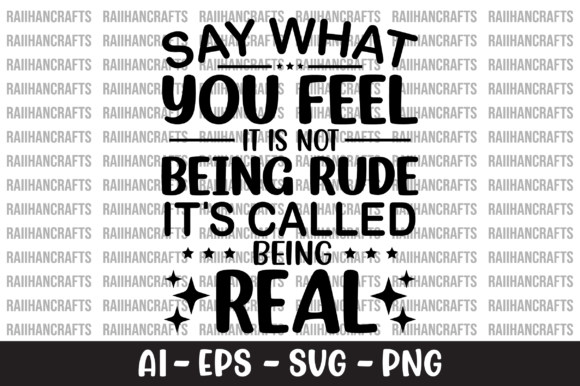
The design itself is clean, modern, and clearly communicates its message. The phrase "Say What You Feel Its Not Being Rude" is written in a stylized font that balances creativity with readability. It has a friendly yet confident tone, making it ideal for personal expression or branding. The layout is straightforward—centered text with a slight flourish that adds visual interest without complicating the design.
This design feels like it belongs on casual wear, personalized gifts, or small business merchandise. It’s not overly complex, which means it can be adapted to various fabric types and project sizes. However, its simplicity also means that the success of the final product depends heavily on execution.
Real-World Embroidery Scenarios: Where It Shines and Where It Needs Care
I tested Say What You Feel Its Not Being Rude SVG on a few different materials and project types. On a standard cotton t-shirt, it looked great—clear, legible, and well-proportioned. The stitch density was moderate, so it didn’t cause any puckering or distortion. For a custom tote bag design, it worked well too, especially when placed on a larger hoop size.
However, when I tried it on a thin, stretchy fabric like a baby onesie, the design became slightly distorted. The lettering wasn’t as sharp, and the stitches pulled slightly. This suggests that the design may need more careful handling on delicate or stretchy materials. Similarly, on dark fabrics, the thread color choice becomes crucial—light-colored threads might not show up as well as darker ones.
For embroidered patches or applique designs, the design could work, but the details would need to be checked closely. Tiny corners or intricate elements might not hold up under high stitch density. That said, if used in a simple fill stitch or satin stitch, it could still look good.
Where to Use It with Confidence
Say What You Feel Its Not Being Rude SVG is best suited for projects where the design can be clearly seen and appreciated. It works well on:
- Custom apparel like t-shirts, sweatshirts, and hoodies
- Tote bags and other fabric-based accessories
- Pillow covers and home decor items
- Personalized gifts such as mugs, aprons, and caps
- Small business merchandise and Etsy listings
It’s also a solid choice for holiday or wedding-themed embroidery, especially when paired with appropriate color schemes. As a digital embroidery file, it can be used in printable mockups or as part of a design asset library for craft businesses.
Caution Areas: When to Think Twice
While the design is generally reliable, there are a few situations where extra care is needed:
- Small hoop sizes: The design may require multiple hooping steps, which can affect consistency.
- Textured or stretchy fabrics: These can distort the design if not stabilized properly.
- Thin or dark fabrics: Thread color contrast and stabilizer use become critical.
- Detailed corners or tiny lettering: The design may lose clarity in tight areas.
- Frequent washing: Ensure the stitching is secure and the fabric can handle repeated cleaning.
If you’re planning to use this design for commercial embroidery or selling finished products, it’s important to check the licensing terms. While the description mentions it’s suitable for t-shirts, mugs, and other purposes, specifics about commercial use aren’t clear. Always confirm before selling.
Designer Notes: Practical Tips for Using Say What You Feel Its Not Being Rude SVG
Before committing to a project, here are some key tips for working with this design:
- Test on scrap fabric: Always do a trial run to see how the design looks and behaves on your chosen material.
- Check thread color contrast: Make sure the thread color complements the fabric and stands out clearly.
- Review stitch density: Adjust as needed to prevent puckering or distortion, especially on delicate fabrics.
- Confirm hoop size: Larger hoops will give better results for this design.
- Inspect small details: Look closely at the corners and lettering for any imperfections.
- Test in black and white mockups: This helps assess visibility and clarity without color distractions.
- Compare light and dark backgrounds: Ensure the design works well on both.
- Use proper stabilizer: Especially important for stretchy or thin fabrics.
- Verify licensing: Confirm whether the design is suitable for commercial or personal use.
As an embroidery designer, I always recommend treating each design as a unique project. Say What You Feel Its Not Being Rude SVG has a lot of potential, but its success depends on how it’s applied. With the right approach, it can be a valuable addition to your design portfolio or a standout piece for your craft business.